11111

Go to Blogger edit html and find these sentences.Now replace these sentences with your own descriptions.

The so called 'Haunted' mountains of the Satpura Ranges: Pachmarhi

achmarhi the only hill station of Madhya Pradesh surrounded by waterfalls, cave temples and the forested ranges of the Satpura National Park and offers a refreshing escape from steamy central India.

Weekend respite – LANSDOWNE (from Delhi)

Go to Blogger edit html and find these sentences.Now replace these sentences with your own descriptions.

This is default featured post 4 title

Go to Blogger edit html and find these sentences.Now replace these sentences with your own descriptions.

This is default featured post 5 title

Go to Blogger edit html and find these sentences.Now replace these sentences with your own descriptions.

Showing posts with label North East. Show all posts

Sunday, August 9, 2015

Manipur: 11 Picture Perfect Places in 1 day


1. Loktak Lake 

This freshwater lake is as picturesque as it gets. Calm and uncrowded, surrounded by villages, it’s the perfect place to just sit and breathe for an hour – to just soak in the astounding surroundings.


2. Keibul Lamjao National Park

This is the only floating park in the world stretching out in the horizon coveing an expanse of 40 sq. Km. It is an integral part of the Loktak Lake and worth a visit for the unique scenic beauty of this place has to offer. If you are lucky, you just might catch a glimpse of the endangered Manipuri brown-antlered deer.


3. INA Memorial Complex


The Indian National Army (INA) War Museum in the INA Memorial Complex dedicated to the Second World War.  Relics of the war from across Manipur dating back to 1944, including arms and ammunition, bayonets, helmets and bottles, among others displayed along with the details on the life and rise of Netaji Subhash Chandra Bose. 

4. Sadu Chiru Waterfall


A 300m walk through a winding road in the forest will, with the sound of cascading water guiding you, will bring you to the base of this waterfall. It is a sight to behold –a 15m pristine column of water in a thick greenery dotted with rocks big enough to be foot holds to lead right at the point where the water hits the ground. 

5. Shree Govindajee Temple 


The largest Vaishnav Temple in Imphal builtby the erstwhile rulers of the Kingdom of Manipur.

6. Imphal War Cememtery


 This cemetery has 1600 Commonwealth burials of World War II – from the Battle of the Kohima and Imphal.


7.ISKON Temple


8. Ima Market


It is a all-woman market place. Probably the only one in the world. With 4000 odd women shopkeepers selling anything and everything, it is a huge attraction for locals as well as tourists.

9.Kangla Fort


The ruins and greenery of the Kangla Fort in the heart of Imphal is a reminder of the erstwhile traditional seat of the Meitei rulers of Manipur.

10. India Peace Memorial


Built by the Japanese Government, it is dedicated to the matyrs of the Imdo-Japanese forces of World War II.

11. Loukoi Pat Lake
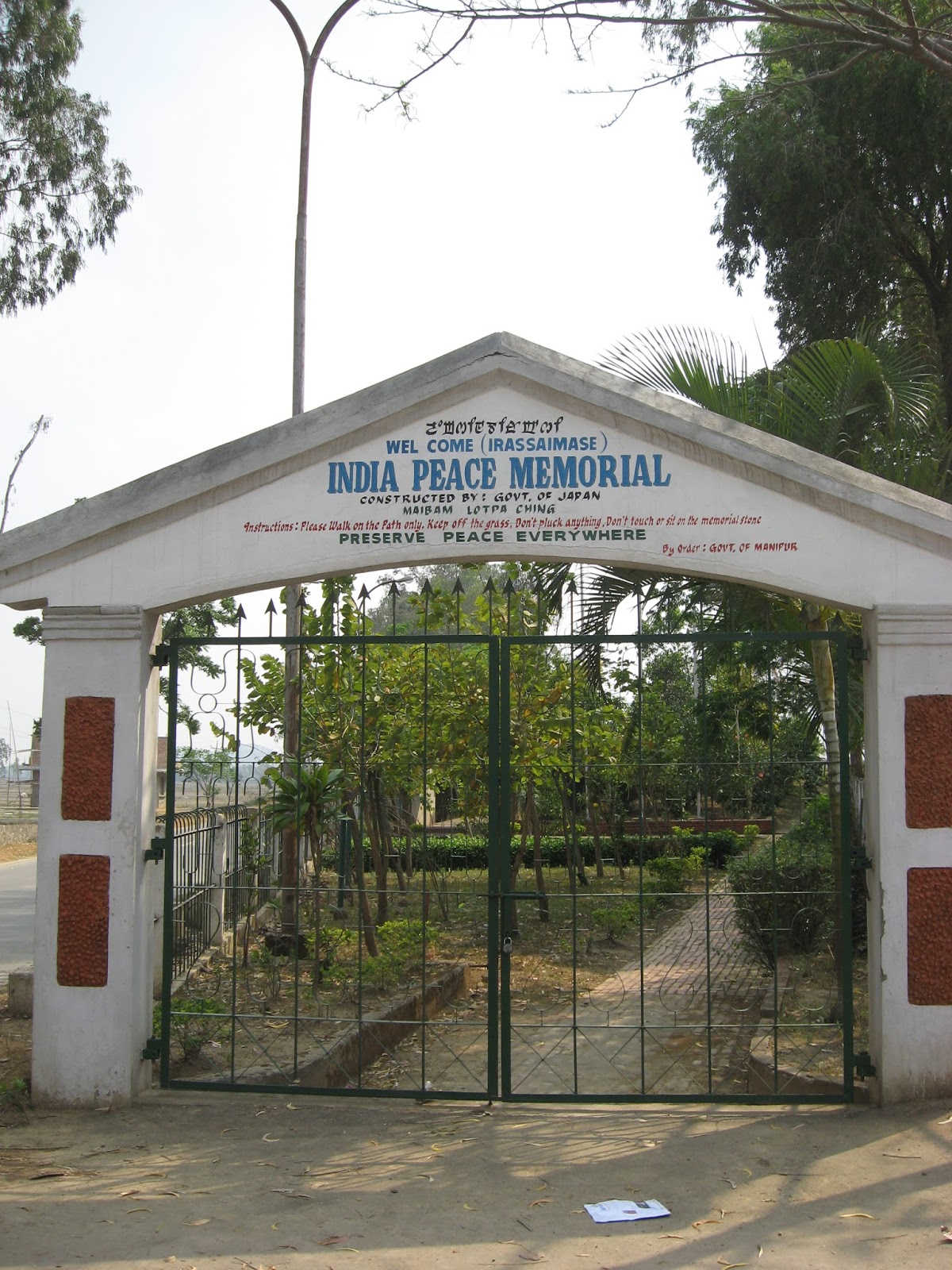


Off the highway on the way to Loktak, it is a scenic spot, perfect for taking a break from the road.


P.S.: Did you know that Jawaharlal Nehru gave Imphal the title ‘Jewel of India’? A befitting name for a beautiful place with its beautiful people. 

Saturday, August 8, 2015

Sikkim: The tale of snow trails

I've been to the mountains several times, but never had the chance to experience snowfall. For the first time, I felt that awesomeness which drove me numb.
It was the end of April, and Delhi already started experiencing the scorching summer-heat. Thanks to the IIT guys who dragged me into their "boys' trip", and helped me in weaving the beautiful memories of exotic beauty.


             Sikkim, the land of pristine and mystic beauty...

View from the flight, Teesta River

The drive from Bagdogra Airport to Gangtok takes some 6 hours, and as you go up, you start feeling the chills, and the road starts getting narrower with every turn. The snow-capped mountains at a distance welcomes you, and the Teesta River accompanies you throughout, till you reach the lively town of Gangtok. 

The graffiti walls, Gangtok 

Being the capital of the state, Gangtok does have too much of hustle and bustle, a fancy market and good restaurants (that's one thing I always look for, being a foodie!!). The graffiti walls will no doubt catch your attention, as it seems that the town is wearing a funky attire, too colorful to be ignored.


Tsomgo lake, better known as Changu Lake


Since this was a random trip, and we had no chalked itinerary to help us out, we decided to seek help from the locals. We just explored Gangtok on the first day.
On the second day, we headed towards TsomGo Lake (famously known as Changu Lake). It takes around 3-4 hours from Gangtok, and at times I felt as if the car is going through the clouds! The beauty of the roads will make you forget time, and there are numerous waterfalls on the way to Changu. And then, you can stop by, for a cup of hot chocolate and yummy steaming momos. Changu was more beautiful than I had imagined it to be. A lake surrounded by mountains on all sides, and covered with snow. Most people prefer yak-rides, but me and my travel-mates decided to walk up in the snow. The universe unfolded its charm, and conspired to make it more memorable for us, and there was a sudden snowfall. What more can one ask for?


The beautiful town of Lachung


The next day we planned to go to Lachung and Yumthang, north Sikkim. Lachung has been described as the "most picturesque village of Sikkim" by British explorer Joseph Dalton Hooker in his definitive, The Himalayan Journal (1855).  Indeed, the colorful little cottages, and the narrow streams flow by, the Buddhist prayer flags dancing with the wind, and the bells of the monastery makes Lachung a dreamland.  Home-stay is the best option in Lachung, it is cheap and you can have authentic Sikkimese food, and the hosts are really warm and will tell you stories about their ancestors who moved from Tibet and settled in Sikkim.


Monastery of Lachung

Kachenjunga, an evening view of the snow capped mountain peak

Yumthang Valley


From Lachung, we drove to Yumthang Valley (12,000 ft above sea level, approx.), popularly known as 'Valley of Flowers’. There’s also the Shingba Rhododendron Sanctuary, and has over twenty-four species of the rhododendron, the state flower. A tributary of the river Teesta flows past the valley, making the scenery look like a painted masterpiece. Yumesamdong, famously known as ZERO Point, is the end of Yumthang Valley. It is situated close to China border, and is sparsely populated. There are little shacks offering the local Honey-Bee brandy, to save you from the -6 degrees temperature! We went crazy, making snowman, throwing snow balls at each other, skiing and what not! Tourists hardly go up to the highest point, but I would suggest that you should take that extra step, and its worth it.

Valley of flowers


And, to add a cherry on the cake, on our way back from Lachung to Gangtok, we saw the rainbow, criss-crossing the horizon, and it seemed as if someone has joined two snow-clad Himalayan peaks with the stroke of seven colors.

I realize how true Ruskin Bond's words are, when he said, "Once you've been to the mountains, there's no coming back. You belong to them."


Sunday, July 26, 2015

5 Reasons Why Arunachal Pradesh Should Be Your Next Destination

Well no one really needs a reason to travel, but if you have been waiting for inspiration to seize you here is the nudge that you needed. You NEED to travel to 
Arunachal Pradesh, in India’s North-east and here is why:


1.   Tawang Monastery – India’s largest monastery.


First and foremost, the main attraction for Arunachal Pradesh is tucked away in its North-west, at the Tawang Valley. Also known as the Gaden Namgyal Lhatse, it is the second largest monastery in the world after the Potala Palace in Lhasa (Tibet), it is actually very close to the Tibetan (now, Chinese) Border.
The Tawang Town being quaint and picture perfect in itself, is also the gateway to the Sino-Indian Border.


2.   Se-La (Pass) – 13,700 ft. 101 Lakes.


Imagine a perpetually snow-covered expanse of bare land and partially frozen Sela Lake at an altitude of 13,700 ft; Imagine fiercely fluttering Buddhist flags greeting you through an exquisite gate laden with Buddhist symbolisms- it’s heavenly. The entire Sela region is said to have a total of 101 Lakes.


3.   Sangatsar Lake – also popularly known as the Madhuri Lake.


This lake was formed after an earthquake in the 1973 and since then is considered sacred by some Buddhist tribes of the region. With the mountains ascending steeply on two of its sides, the eerie dead trees breaking through the surface of the lake and Buddhist prayer flags festooned all over the place, it is an enchanting sight to behold. On the way to this lake the rugged road passes by innumerable lakes, each as captivating as the other.


4.  Bum-La (Pass) – the Sino Indian Border


One of the most off-beat passes in the world, it is heavily covered in snow throughout the year and connects India and China in this region. Access to this pass is regulated by the Army though and is sometimes not easy to get. But, definitely more than worth the trouble.


5.   The Journey, of course.

Tawang War Memorial

The town of Bhalukpong with the Kameng River,  the Nameri National Park, the Pakhui Wildlife Sanctuary, the Sessa Orchid Sanctuary, the towns of Dirang with the Dirang Dzong and Monpa Villages, the town of Bomdilla, Jaswantgarh, the Nyukmadung War Memorial, Nuranang Falls, innumerable army camps,  the Tawang War Memorial, all strewn throughout the journey hold promises of a life altering experience.

Nuranang Falls


6.   (Bonus)  Kaziranga National Park


On your way back from Arunachal Pradesh, an over-night stop at the Kaziranga National Park seems almost mandatory. After the winding high-altitute roads of Arunachal Pradesh and the ruggedness of the terrain in general, a leisurely day at Kaziranga with Rhinoceroses within arm’s length is highly recommended.


Arunachal Pradesh, yet to exploit its potential as a place of tourism, is still in its virginal state. The roads bordered by the wild blooms of purple flowers at some area, lost in the shade of dense trees in others and even just chucks of snow covered rough rocks in between is nature’s magic and mystery entwined together in its truest form.


Note: This article is only on the North-Western region of Arunachal Pradesh. 


Twitter Delicious Facebook Digg Stumbleupon Favorites More