11111

Go to Blogger edit html and find these sentences.Now replace these sentences with your own descriptions.

The so called 'Haunted' mountains of the Satpura Ranges: Pachmarhi

achmarhi the only hill station of Madhya Pradesh surrounded by waterfalls, cave temples and the forested ranges of the Satpura National Park and offers a refreshing escape from steamy central India.

Weekend respite – LANSDOWNE (from Delhi)

Go to Blogger edit html and find these sentences.Now replace these sentences with your own descriptions.

This is default featured post 4 title

Go to Blogger edit html and find these sentences.Now replace these sentences with your own descriptions.

This is default featured post 5 title

Go to Blogger edit html and find these sentences.Now replace these sentences with your own descriptions.

Saturday, April 9, 2016

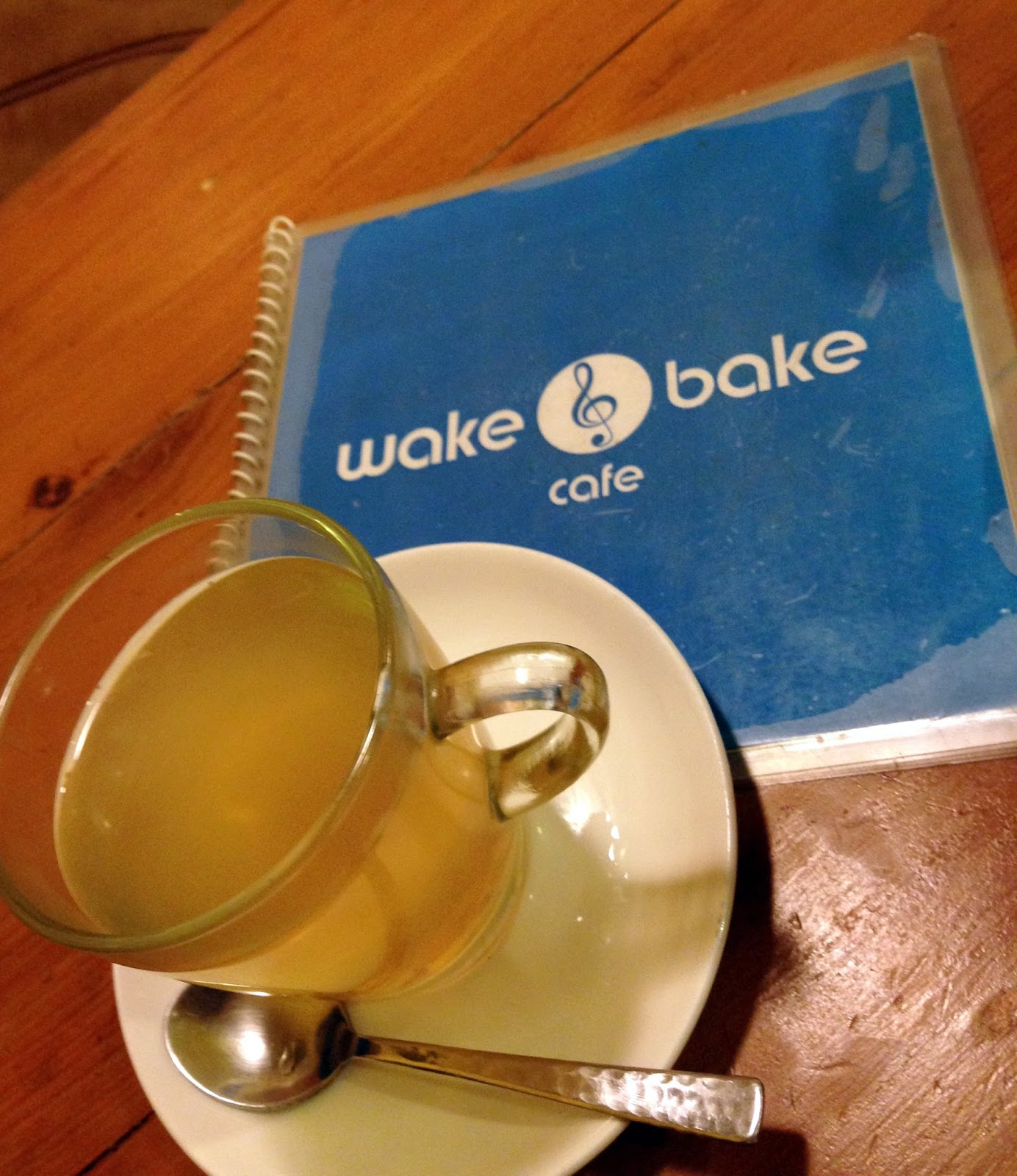
Destination Cafes- WAKE & BAKE CAFE SHIMLA


Pic source: Wake & Bake Facebook page


Wake & Bake is one of best cafe on hills I have visited so far.

Situated right at the heart of of city. Wake & Bake is on the 2nd floor of a building in front of the Shimla Town Hall on the Mall Road.  


 Beautiful ambience,  bright yellow walls, comfortable wooden benches for sitting, and windows overlooking the Mall Road. it’s a colorful chirpy cafe decorated with amazing art works on the walls. They also have an open air terrace sitting from where you can get a view of the beautiful valley on the other side. 


It serves Italian, French, Lebanese, Mediterranean and Continental delicacies. 

Some of the best pancakes I’ve ever had, great hummus and pita platter and Kashmiri kahwa at a very reasonable price. 

Not only great tasty food but also great service.

Don't forget to visit this place when you are in Shimla. 

If you are lucky, you might witness to a jamming or book reading session at Wake & Bake.

It's great place to hang out and sip your favorite cup of  tea or coffee.


.

Thursday, March 24, 2016

A Day's Trip To Agra

With Love, From Agra


For someone living in Delhi, there are ample options to choose from, when it comes to pick a destination for weekend escape.
I prefer the hills and the serenity more, but a friend who came to visit was more keen on exploring Agra. I’ve been to Agra before, with parents and cousins, and this was my third visit to the city. Surprisingly, it was as good as the first time, and richness of the city didn’t fail to amaze me, all over again.
How To Reach: If you have a car, then you can drive down the Yamuna Expressway, and it’ll take around 3 to 4 hours, depending on the traffic, and the halts.
We rather chose the best option – the 6 am Shatabdi, from NDLS. It takes 2 hours in the train and you’ll reach Agra by 8am.
Brush up your bargaining skills, because the autowallahs have already the planned to rob you! The distance from the Agra Cantt to Taj Mahal is around 6Kms, and its for 50 bucks, so don’t pay more!
We were in the mood to splurge, so we decided to have breakfast at The Taj, which was a grand spread, and we hogged to our hearts content.
Then we headed towards Taj Mahal – the epitome of Love!
Try reaching there as early as possible, because the more late you get, the more crowded it’ll be. Do take a guide, YES! That’s a must, because otherwise you’ll miss all the fun stories – these guides have a different way to narrate the Mughal tales! (Bargain with the guide, it’s just Rs 200 that we paid for a 3hours tour!)
We’ve all read about the Mughal grandeur and architecture, and much more about Taj Mahal, but unless you see it, you’ll not realise how thoughtfully it was done – like there’s so much of science behind its construction – starting from earthquake resistance to 3D effects!
From Taj Mahal, we headed towards the Agra Fort, which took another  2 hours to explore. Most of it has been closed for the tourists now, and the pollution would not let you have a clear view of the Taj Mahal from the Fort.
For lunch, we went to a café called Sheroes, which is run by the acid-attack victims – and I would suggest everyone to pay a visit there, not just for the food, but for the ambience. It’s a ‘Pay as you Wish’ café serving quality food. You can also join them for cooking, and of course have a chat with them, they too have wonderful stories to tell you.
If you are keen on shopping then you can explore the local market, but they have exorbitant prices, for they mostly aim to sell those to foreigners.
If you plan to stay for a night, then definitely take a cab and head towards Fatehpur Sikri. Because we had to return back that day itself, we took a bus at 4pm, and we reached Delhi by 7.30 pm.

Yes, Agra can be well explored in a day, and it won’t pinch your pocket too!

Sunday, March 13, 2016

'Ayodhya' the ancient city from Ramayan

By Shubhashish Chaudhri


AYODHYA- the land of temples and peace
Well being in the final year of college has brought about a lot many changes and various plans have been made but to execute those plans is another thing. A sudden plan made alongwith friends meant that finally i am going to get a chance to go out to places which are there on my so-called BUCKET LIST. On a chilling cold morning of January to get up at 5:30 am in the morning is in itself a big mission impossible but we are all like that only. For classes which happen at 10am we cant get up but just tell us that we are travelling somewhere i will get up in the middle of the night.


How to reach-
Ayodhya is not a very big place so it can be done only within 12 hours max including travelling(and yes i am not lying). You can either go by bus which takes some 2 and half hours. Ayodhya is just a 130 odd kms from lucknow. Oops i forgot this is not just meant for people from lucknow. Anyways since we were some 6 friends we booked a cab and off we went.
Ayodhya is on the right bank of the river Sarayu, 8;km from Faizabad. This town is closely associated with Rama, seventh incarnation of Vishnu. According to the Ramayana, the city is 9,000 years old and was founded by Manu, the first man in the Vedas, and law-giver of the Hindus.
Since it is mainly the place where you have temples(12) in number to be precise, there is only so much that you can do but still. It would be better if you have someone with you who has either been to ayodhya or knows about the place and temples. A guide wont b of much help. We had one such person with us.


Kanak mandir
Kanak Bhawanin Ayodhya is the palace of Sri Sita and Rama. It was a welcome gift to Sita from her mother-in-law Kaikeyi. Kanak Bhawan still exists in Ayodhya.


Hanuman Garhi, a massive four-sided fort with circular bastions at each corner and a temple of Hanuman inside, is the most popular shrine in Ayodhya. Situated in the center of town, it is approachable by a flight of 76 steps. Its legend is that Hanuman lived here in a cave and guarded the Janambhoomi, or Ramkot. The main temple contains the statue of Maa Anjani with Bal Hanuman seated on her lap. The faithful believe wishes are granted with a visit to the shrine


Ram Janmabhoomi (literally, "Rama's birthplace") is the name given to the site that many Hindus believe to be the birthplace of Rama, the 7th avatar of the Hindu deity Vishnu.
The Ramayana states that the location of Rama's birthplace is on the banks of the Sarayu river in the city of Ayodhya. A section of Hindus claim that the exact site of Rama's birthplace is where the Babri Masjid once stood in the present-day Ayodhya, Uttar Pradesh.


Janaki Mahal established by Late Sri Mohan Lalji, run by Trust, beautiful Mandir of Janki Mata & Lord Ram. Many social activities, food for poor people, charitable medical facility for poor people managed by Sri Vishwanath Murarka.


Sarayu
Ayodhya, capital of King Rama is mentioned on the banks of Sarayu river. Sarayu river is mentioned in great details in Ramayana. Ayodhya still exists on the banks of river Sarayu in Indian state of Uttar Pradesh. It is a tributary of the Ganges which meets two other rivers at the confluence (sangam) in Uttar Pradesh.

All in all, it will still be a nice experience one which everyone should have once in their life and lastly not to forget the place is famous for its besan laddoos and pedas.


About Shubhashish Chaudhri

An avid food lover, loves reading like anything and a big MOVIE and English tv shows FREAK and going to new places even though i haven’t been to a lot of places but I intend on travelling through the entire country during my life. 

Saturday, March 5, 2016

The 'Golden City of Rajasthan' - Jaisalmer (Part 3)

By Parth Yadav

...continued from Part 2

But first things first, one thing was left in Jaisalmer before we could ‘hit the road’ and that was the very famous JAIN TEMPLES. Not for religion, not for praying for marks or asking for a girlfriend, but just for travel’s sake do pay a visit to these Temples! It will be worth it. Within the Jaisalmer Fort walls is a maze-like, interconnecting treasure trove of seven beautiful yellow sandstone Jain temples, dating from the 15th and 16th centuries. These temples are built in the Dilwara style that is famous all over the world for its architecture. The style got its name from the famous 'Dilwara Temples' situated on Mount Abu, a famous Hill station in Rajasthan. The Jain temples are dedicated to Rikhabdevji and Shambhavdev Ji, the famous Jain hermits known as ‘Tirthankars’. Like other structures in Jaisalmer, these temples are craved of yellow sandstones. The beautifully carved decorations on the wall will give you divine peace. One couldn’t ask for a better start to the day! Authors Advice: Opening and closing timings of these Temples have a habit of changing, so do check with the caretakers. Shoes and all leather items must be removed before entering the temples.


Post this we had our breakfast at one of the numerous restaurants within the Jaisalmer Fort Complex. And then went straight to one of the ‘Rent A Bike’ Shops! Yes!! It was finally time for some adventure. Authors Advice: There are plenty of ‘Rent A Bike’ shops in Jaisalmer, which provides you Activas, Bajaj Discovers, Avengers and Royal Enfield on rent. The rent varies from vehicle to vehicle. And all they need for security is a minimum token amount and yes, a valid photo Identity Card. All this is returned once you handover the keys of the bike back to the owner. The petrol is on you! And hence, it is highly advisable to get your tank full before you start. There are ‘NO’ petrol pumps on the way. Only some ‘Kirana Shops’ which sell petrol at almost twice the actual rate! Also, booze in the Desert is again, pretty expensive, so it’s advisable to buy from Jaisalmer itself, before you leave.

So, yes! Handing over my voter ID card to the shop owner and taking the keys of an Avenger, we kickstarted our way to the real desert! Basically, one should reach Sam around sunset i.e. around 4:00- 5:00 PM. So, even if you start from Jaisalmer by 2:30-3:00 PM, it would suffice. But we had other plans! We wanted to cover the nearby areas as well before reaching Sam, specifically ‘Kuldhara’. What is Kuldhara? Wait! Patience yields the sweetest fruits! :P

Hence, we started off from Jaisalmer at around 11:30-12:00 PM. Our first halt was the BADA BAGH or the ROYAL CENOTAPHS. Bada Bagh is a garden complex about 6 kms north of Jaisalmer on way to Ramgarh, and halfway between Jaisalmer and Lodhruva. Authors Advice: Although the authorities have placed adequate milestones/ boards at a number of places and in fact at every turn keeping in mind all the tourist hotspots en-route to Sam yet, do carry a small map of Jaisalmer or activate the GPS on your phone before hitting the road. The Bada Bagh has basically three different things to watch, a garden, a tank and a dam. Other interesting monuments in the vicinity are the Cenotaphs. These cenotaphs also known as ‘Chattris’ and were constructed by the various Bhatti rulers. One cenotaph has been erected for each ruler. The oldest among them is the cenotaphs of Maharawal Jait Singh who reigned from 1470-1506. This tradition was discontinued when in 1947, one of the prince died of a mysterious disease! The place is basically isolated yet the garden offers a stunning view. If you visit the place during sunrise and sun set, you are guaranteed of beautiful moments, which you cannot avoid clicking.


Moving on, was the destination I was most eagerly waiting for! The KULDHARA VILLAGE!! So, basically, I am one person who, from a very early age has been hell interested in ‘apparently’ supernatural stuff. The word ‘haunted’, where on one hand gives people goosebumps, on the other, in my case, it gives me an adrenaline rush to go and the check the place out. And that’s what we exactly did. Kuldhara is almost 18 kms from Jaisalmer. While going towards Sam, you have to take a right turn from the main road and a few kilometers on that right turn, you’ll find the entrance to Kuldhara. Once you pass through the entrance gate, you automatically get a very eerie feeling. A perfect place to be inhabited lies all vacant. No sign of any human anywhere! A small patchy road leads you inside the village. And suddenly, you find yourself standing right in centre of the village in front of a temple! Yes, a temple! With a lit ‘diya’ kept inside the temple! If this wasn’t enough, out of nowhere an old man came from behind and said ‘Khamma Ghani’ or “Hello’! We actually and literally froze for a couple of seconds. Until one of us regained our senses, and replied with a ‘Ghani Khamma’. That’s how you revert to a ‘Hello’ in Rajasthan. Our guide in Jaisalmer taught us this. Anyways, it turns out, he was indeed a human, a live human, with blood and flesh and was the caretaker of the temple. He welcomed us and then on being asked told us the story behind Kuldhara, a happy and prosperous village turning into a deserted and supposedly haunted hamlet! So, it turns out that once there was a Prime Minister of a kingdom who was not just powerful but an evil man as well. He forced all the villagers to coerce the village head to allow him to marry the village head’s daughter. Though, the villagers were against it and tried to protect the Lady, yet all their attempts went in vain in front of the powerful minister. Hence, they decided to leave the village under the cover of the night, thus safeguarding not only the village head’s daughter but for that matter even their own daughters from the evil eyes of the Minister. But the story doesn’t end here! Before leaving the village, the villagers cursed their own village and said that no man shall ever be able to inhabit this place ever again. And so it happened! As mentioned before, a perfectly prosperous village with perfectly good houses now lies barren and crumpling with time. Apparently, some people who didn’t believe in this story and tried to stay in the village were chased away by some or the other paranormal activity. Frankly speaking, there is something in the air of Kuldhara, which somehow forces you to believe this story.


Anyways, it was almost 3:30 PM and we were yet another 25-30 kms away from Sam, we bid farewell to the old man, and were back on the road. Another, 45 minutes on the main road and we reached our final destination… the mighty SAM SAND DUNES!! In short and I couldn’t be more precise in saying this, we were basically in the centre of the “Great Indian Thar Desert”! These dunes are 42-45 kms away from Jaisalmer and a nice sealed road maintained by Indian Armed Forces leads you to the place. Authors Advice: Driving a bike on this road is in itself a roller coaster ride. There are periodical crests and troughs which makes it almost impossible to see what’s coming from the opposite side of the road. So beware! And if this wasn’t enough, like in UP or Delhi you find dogs and cows loitering on the road, in Rajasthan, you get to find camels!


Anyhow, there is no point coming to the Thar Desert if you don't go for the Desert Safari. That is why Sam Sand Dunes are becoming the major attraction in Jaisalmer. This is the closest place from where you can lose yourself in the Great Thar Desert.  A rare desert area which lies just on the edge of Jaisalmer Desert National Park and is also rated as top 10 must see tourist destinations in Rajasthan by Lonely Planet & Tripadvisor, Sam Sand Dunes are simply amazing.

About Parth:
Currently pursuing his bachelors from National Law University, Lucknow is a bibliophile and an avid fiction lover. Travelling is not just his hobby but his passion. He likes to explore the unexplored and does things which aren't mainstream. Mountains, "supposedly" haunted destinations and bike trips are what attracts him the most. A certified trekker by the Youth Hostel Association of India, he dreams to cover the Himalayas on his bike someday!


Tuesday, February 23, 2016

The 'Golden City of Rajasthan' - Jaisalmer (Part 2)

By Parth Yadav

...continued from Part 1


The Jaisalmer Fort has rooms which depict the lifestyle of the kings and queens, the clothes that they used to wear, the kind of food they ate, the festivals they celebrated, etc. One does feel teleported to a different India, altogether!


You even get to have a very close look at the entire Yadav/ Yaduvanshi clan, which originated from Lord Krishna himself. The rulers of Jaisalmer are also Yaduvanshis and there are portraits of each and every ruler including the present day King, Maha Rawal Brijraj Singh, adorning the walls of the fort. Unlike any other dynasty, the Yadav or Yaduvanshi Kings are always referred as Maha Rawal instead of Maharaj. This feature sets apart a Yaduvanshi king from any other Rajput king.


Authors Advice: Do hire a guide! They have fixed rates so basically no use bargaining. But going without a guide will either lead you to getting lost in the fort and even if you don’t you won’t be able to understand and appreciate the fort and the history related.
It was already noon by the time we finished with the Fort, and hence we stopped at one “Jaisal Italy”, an Italian Restaurant in Jaisalmer. Bang on the main entrance for the Fort, it serves some really good Italian food and most importantly gives you break free- crystal clear- panorama view of the Jaisalmer Fort. Oh! Watte beauty!


Next on the list of places to visit, was the very famous PATWON KI HAVELI, Amar Sagar Pol, Jaisalmer, Rajasthan-345001. Yeah! Yeah! I know, what your next question is? Address with Pincode! Yes! and if this comes across as a symptom of someone who suffers from OCD, then lemme clear the air by stating that yes, the author of this travelogue does suffer from one! Anyways, moving on, the Patwon Ki Haveli, is not only the first Haveli  to be erected in Jaisalmer but it is also one of the most important and the largest haveli, ever to be constructed in Indian history. It is not a single haveli but a cluster of 5 small havelis. The first in the row is the most popular, and is also known as Kothari's Patwa Haveli. It was constructed in the year 1805 by Guman Chand Patwa, then a rich trader of jewellery and fine brocades, and is the biggest and the most flamboyant. Patwa was a rich man and a renowned trader of his time and he could afford and thus order the construction of separate stories for each of his 5 sons. He was apparently so rich, that he used to lend money to even the Kings of those times during war or during a financial crunch! The Haveli(s) were constructed in the first 60 years of the 19th century and were completed in a span of 50 years. The entire construction is made of yellow sandstone and immediately draws your attention to the intricacy of its architecture. It is most famous for its fine wall paintings, beautiful jharokhas (balconies), archways and gateways. The grandeur and the architecture of the monument add immense value to the cultural heritage of the city. 

Authors Advice: Again! Do hire a guide. This time hire one guide, who takes around 100 bucks per monument and basically gives you a city tour completing the 3 major Havelis and the City Palace, too! 

We got one such guide, and once done with Patwon Ki Haveli, our next destination was NATHMAL JI KI HAVELI. This late-19th-century haveli, used as the residence of the Prime Minister of Jaisalmer, Diwan Mohata Nathmal, is still partly inhabited. There is a very interesting story regarding its construction. It is said that the architects of this Haveli were two brothers, Hathi and Lulu, who started building different facets of Haveli simultaneously. The competitive spirits of the brothers apparently produced this masterpiece – the two sides are similar, but not identical. There are two Elephants made of yellow stone, at the entrance, which are stunning in themselves. These life-size replicas at main entrance look as if they are guarding the Haveli and welcoming the guests. Other than these, there are pictures of Horses, Cattle, and depiction of Flora engraved on pillars and walls.


Post Nathmal Ji Ki Haveli, our next stop was the MANDIR PALACE or the CITY PALACE. Mandir Palace is a prominent landmark in the city of Jaisalmer and as well, has been the residence of the rulers of Jaisalmer for more than two centuries.  Even the present day King of Jaisalmer, Maha Rawal Brijraj Singh, resides here. Mandir Palace is a dainty carved architectural marvel of ornate balconies, canopies and delicately carved screens. The most prominent feature of the Mandir Palace is the BADAL VILAS, a tower which stands out as the tallest structure below the hill-top city Fort. The Mandir Palace has now been converted partially into a luxury hotel and partially into a Museum. The rest is used by the Maha Rawals as their residence.


Next on the list, was the SALAM SINGH KI HAVELI. But crap! It was closed for maintenance. Thankfully, by the time we reached here we were friends with our guide, and hence, through his contacts, he made us climb at the roof of this one small shopping complex from where the top/terrace (and also the most magnificent part) of the Salam Singh Ki Haveli, was clearly visible. The haveli has a distinct architecture. The beautifully arched roof has very intricate carved brackets which take the form of peacocks. Frankly speaking, for me, it was like seeing the Kohinoor, you got to see the best part, why care about what kind of cloth is used for making the rest of the Crown! Authors Advice: Be nice and friendly to your guide!


Post Salam Singh Ki Haveli, we paid off our guide and bid him adieu! We too were way too tired (Yeah! the two too’s. Just to show how tired we were) of so much walking, that all we wished for is some peaceful time minus the chaos of the city and also sans any kind of walking. You ask this question from any Jaisalmer-ite, and the only answer you’re bound to get is…. Yes! Ladies and Gentlemen, presenting before you, our next place-to-be…. THE GADISAR LAKE, Postal Colony, Jaislamer, Rajasthan- 345001 (OCD! Told ya.) A perfect 10 on 10 answer to all our queries! This is exactly what we wanted after such a tiresome day. As generally believed, Gadisar Lake is not an oasis but a water conservation tank made around 1400 A.D. by Maharawal Gadsi Singh. Although it no longer serves its historic purpose of supplying water to the Jaisalmer City, the lake still retains most of its rainwater. One gets to find myriad temples and shrines surrounding the lake. The beautiful gateway that arches across the road down to the Lake was built by a royal courtsman named Tillon in the end of 19th century and is known as Tillon Ki Prol (Gate of Tillon). Authors Advice: Enter from the main gateway and go around the lake. You’ll find these stairs leading to a temple. Climb these and sit in the balcony of this temple facing the Lake. All your tensions, worries and other life-issues will come to standstill. Peace and calmness will be your ‘take-away’ from Gadisar!


High on the Gadisar air, we left the place and went back to our hotel to freshen up. Once done with that we left on foot in search of some good restaurant. And we were delightfully surprised to land at one, ‘Kebab Corner’. Now, coming from the City of Kebabs (Lucknow) itself, I was very much apprehensive. But then, that’s where I got ‘delightfully surprised’. Some actually-really good Seekh and other assorted Kebabs were served and we coupled it with a bottle of chilled beer! What else can one ask for?

On our way back to the hotel, it started raining. Rains in Jaisalmer are a sight to watch for. The petrichor, when water falls on dry sand, is just too good to be explained or written about. Guess, we were lucky enough to enjoy the same and that too in Jaisalmer!
Next morning, we got up early because today we had to hit the road! Like literally, hit the road! Enough of walking around the Havelis and the Palaces (not that it wasn’t interesting!) but guys being guys, a trip won’t ever be complete without some adventure in it. And NOW! Was the time for adventure!! <wicked smirk>

To be continued...

About Parth:
Currently pursuing his bachelors from National Law University, Lucknow is a bibliophile and an avid fiction lover. Travelling is not just his hobby but his passion. He likes to explore the unexplored and does things which aren't mainstream. Mountains, "supposedly" haunted destinations and bike trips are what attracts him the most. A certified trekker by the Youth Hostel Association of India, he dreams to cover the Himalayas on his bike someday!


Thursday, February 11, 2016

Dayara Bugyal Trek Expedition with Indiatrotters


Dayara Bugyal is truly bliss for the trekkers. It is one of the most scenic, appealing and high altitude alpine meadows in Uttarakhand. Situated at an elevation of about 3048 m, this vast meadow is second to none in natural beauty. This quaint meadow offers one of the most enthralling trekking routes in the world. 

Come join us for this thrilling trek.This trek is for those trekkers keen to discover the outdoors and experience the mighty Himalayas at a high altitude. #GoOffBeat

Difficulty Level- Easy to Moderate

Past Requirement in trekking - Not essential

Max Altitude :- 12,000 Ft.

Fitness requirement-  You need to be physically fit. People with lungs problem, heart problems and other serious problems are advised to avoid the trek.

Dayara Bugyal Trek Cost: Rs 6999   per person excluding taxes (Delhi to Delhi)

Dates:  14th April 2016 - 17th April 2016

Booking details:
Mail us at travel.indiatrotters@gmail.com  or,
Call- 9899538371 or 9433301650


ITINERARY  

Starting from Anand Vihar Delhi at 11 P.M  night to Dehradun

DELHI TO DEHRADUN 250KM – 6 hours drive approx

Day 1

Reaching Dehradun in the morning by 7 A.M
Breakfast at Dehradun
Drive from Dehradun to Barsu ( via Uttarkashi) – 200KM (around 6 hours drive)
Lunch enroute at Uttarkashi
Reaching Barsu at around 5 P.M
Staying at a Guest House at Barsu
Dinner at Barsu Guest House

Day 2

The trek will start at 6 A.M from Barsu for Barnala. (8530 ft) 4 Km, 3-3½ hrs trek.
Reaching Barnala at 11.A.M
Breakfast at Barnala
Camp + sightseeing + Lunch + Dinner + bonfire
+ music and other activities.

Day 3

Trek for Dayara Bugyal starts at 6.AM. (3-4 hrs trek)
Reaching Dayara Bugyal at around 10 A.M
Breakfast, Lunch at Dayaral Bugyal
Explore the impressive views of the Gangotri and the Banderpunch ranges.
Will be starting back at 1 P.M
Get back to Barnala (camping sight) by 4 P.M
Dinner, bonfire and other activities at Barnala (Leisure evening)

Day 4

Leave for Delhi in the morning
Reach Delhi by 11 PM night.


Cost Terms

Inclusions :-
1. Accommodation. (Guest house, Camping)
2. Meals while on trek (Veg) (Egg)
3. Tents and Trek equipments
4. Permits
5. First aid medical kits and oxygen cylinder.
6. Qualified & experienced trek Leader, Guide and Support staff

Exclusions 
1. Any kind of personal expenses.
2. Food during the transit.
3. Mules to carry personal luggage.

Sunday, February 7, 2016

The 'Golden City' of Rajasthan Jaisalmer (Part 1)

By Parth Yadav

YAAR BAHUT PAHAD HO GAYE, ISS BAR REGISTAAN CHALTE HAIN!!


“Of all the paths you take in life, make sure a few of them are dirt.” ~John Muir.

“Of all the trips you take in life, make sure one of them is in a dessert.” ~Author.

“Mad! You are!” said my Mom, uncles, aunties, cousins, friends and basically anybody and everybody who came to know about my plan of travelling to Jaisalmer in the month of ‘June’. Yes! You heard it right, ‘June’ it was! But then as they say, there is a difference in being a tourist and being a traveler. I, fortunately or unfortunately fall in the latter category. Hence, the less-mainstream the trip, the better it is. And keeping this motto in mind I alongwith a friend booked our tickets for DLI-JSM Express. A week later we were at Old Delhi Railway Station boarding the train. There are a couple of trains directly from Delhi to Jaisalmer, tickets of which are generally available. For those travelling by Air, there are no direct flights from Delhi to Jaisalmer. Nearest airport is that of Jodhpur, from where one can take a train/bus/cab to Jaisalmer. There aren’t even any direct bus services from Delhi to Jaisalmer. One has to change the bus either from Jaipur or from Bikaner, whichever seems feasible. Author’s Advice: Travelling by train is a really good option. Though, the train takes almost 17 hours to reach Jaisalmer, yet, one gets to travel across most of the Rajasthan and the train (no matter how late it gets in between!), generally reaches the concluding station on time or as in our case, before time!  

On the way, one can actually feel Jaisalmer coming closer as the trees start turning into shrubs and bushes and the soil into sand. Finally, the next morning at around 11:30, we reached Jaisalmer. And you realize you’re gonna have an epic trip, the moment you touch the Jaisalmer Railway Station. Believe me! I haven’t seen a railway station more beautiful and cleaner than this one. Kuddos to the Station Incharge and the railway authorities, even other Indian cities should take a cue from this Railway Station!


We were already in talks with the Manager of one, Hotel Payal, for our stay and hence he had already sent a cab to pick us up from the station. Being a travelers’ delight, Jaisalmer has plenty of hotels and resorts suiting all pocket sizes. 
Author’s Advice:  Do pre-book a hotel in case you’re planning to travel during the peak tourist season of September-February, because during this time Jaisalmer takes the shape of a Mini-Europe, with almost every third person you get to meet, being a European! And hence hotel prices shoot upto triple the actual cost of the room. 


After almost 17 hours of non-stop train journey, one does feel tired and exhausted, hence the moment we checked in our hotel, we took a shower, had lunch and dozed off! Jaisalmer is a small town which can mostly be covered on foot, hence a proper rest to your feet is kind-of required. By the time we got up, it was already late and hence most of the markets were about to close. We hurriedly went to the nearest restaurant, had food and started our next big search… A THEKA! :P Getting the shock of our lives, we got to know that the liquor shops in Jaisalmer closes at sharp 8 PM! Now what? Authors Advice:  You can still get it but in an illegal manner till 10 p.m :P  


Next morning, as per the itinerary we made in consultation with the Hotel Manager and affcourse, Google, we started off on foot for our first destination… the huge and magnificent JAISALMER FORT! Built in 1156 AD by the Rajput ruler Rawal Jaisal, from whom it derives its name, Jaisalmer Fort is one of the largest fortifications in the world. It is a World Heritage Site. The Fort stands amidst the sandy expanse of the great Thar Desert, on Trikuta Hill, and has been the scene of many battles. Its massive yellow sandstone walls are a tawny lion colour during the day, fading to honey-gold as the sun sets, thereby camouflaging the Fort in the yellow desert. For this reason, it is also known as the Sonar Quila or Golden Fort. The Fort is located in the very heart of the city, and is one of the most notable monuments in the locality. The most interesting fact about the Fort is that initially the entire city of Jaisalmer was located inside the Fort only. Or in other words, the Fort was the Jaisalmer City! It is with time and growing population, that people started making houses and markets outside the Fort. On visiting the Fort, you will actually feel that the Fort is a city/town in itself. 


The Fort is all about the beautiful and massive Rajput architecture. Inside the Fort Muesum, you get to see massive weaponry, from swords, which in themselves weigh 30-40 kilograms each, to all sorts of guns and air pistols used in those days. There were guns, so huge, that 2 men were required to operate a single gun! 


To be continued........


About Parth:
Currently pursuing his bachelors from National Law University, Lucknow is a bibliophile and an avid fiction lover. Travelling is not just his hobby but his passion. He likes to explore the unexplored and does things which aren't mainstream. Mountains, "supposedly" haunted destinations and bike trips are what attracts him the most. A certified trekker by the Youth Hostel Association of India, he dreams to cover the Himalayas on his bike someday!


Twitter Delicious Facebook Digg Stumbleupon Favorites More