11111

Go to Blogger edit html and find these sentences.Now replace these sentences with your own descriptions.

The so called 'Haunted' mountains of the Satpura Ranges: Pachmarhi

achmarhi the only hill station of Madhya Pradesh surrounded by waterfalls, cave temples and the forested ranges of the Satpura National Park and offers a refreshing escape from steamy central India.

Weekend respite – LANSDOWNE (from Delhi)

Go to Blogger edit html and find these sentences.Now replace these sentences with your own descriptions.

This is default featured post 4 title

Go to Blogger edit html and find these sentences.Now replace these sentences with your own descriptions.

This is default featured post 5 title

Go to Blogger edit html and find these sentences.Now replace these sentences with your own descriptions.

Thursday, May 8, 2014

Introducing Leh the land of endless discovery! Part 1 (Leh-Ladakh)


There are a very few places in India which are at once so traveller-friendly and yet so enchanting and hassle-free as mountain-framed Leh. Speckled with stupas and crumbling mud-brick houses, the Old Town is dominated by a dagger of steep rocky ridge topped by an imposing Tibetan-style palace and fort. Beneath, the lively bazaar area is draped in a thick veneer of tour agencies, souvenir shops and pizza restaurants, but a web of lanes quickly fans out into a green suburban jerry-rigged of irrigated barley fields. Here, narrow footpaths and gushing streams link traditionally styled Ladakhi buildings with flat roofs, sturdy walls and highly wrought wooden window frames. Leh’s a place that’s all too easy to fall in love with, but take things easy on arrival. The altitude means that most visitors initially suffer mild headaches and breathlessness. To prevent this becoming full-blown Acute Mountain Sickness (AMS), drink plenty of ginger tea and avoid strenuous exertion at first. 


About: Ladakh, the coldest desert in the world. As the highest inhabited land in the world, it is both fascinating and enchanting for travellers across the Globe. Ladakh means "land of high passes". Fabulously serrated, arid mountains embrace this magical, Buddhist ex-kingdom. Colourful fluttering prayer flags spread their spiritual messages so as the prayer wheels spun clockwise release more merit-making mantras. Gompa interiors are colourfully awash with murals. Ladakh’s extraordinarily well-balanced traditional society has much to teach in terms of ecological awareness. Whereas most Ladakhis are comparatively cash poor, traditional mud-brick homesteads are large, comfortable and self-sufficient in fuel and dairy products, organic vegetables and barley used to make tsampa (roast barley flour) and chhang. Such self-sufficiency is an incredible accomplishment given the short growing season and very restricted arable land in this upland desert, where precious water supplies must be arduously channelled from glacier-melt mountain streams.

How to reach Ladakh: By Air – Flights are dramatically scenic, but can be cancelled at short notice. Al though flying into Leh means you’re likely to suffer mild altitude problems on arrival.

By Manali-Leh Road: Fabulously beautiful but gruellingly rough (takes around minimum 22 hours). The road is frequent subject to landslides and is generally closed from October-May.

By Srinagar- Leh Road: The route is less physically painful and lower altitude but also less spectacular than Leh- Manali road. The road is generally closed from November to May.

Places to Visit: 


Leh Palace:  Also known as Namgyal Palace. Bearing a passing similarity to the Potala Palace in Lhasa (Tibet), a nine-storey dun-coloured palace took shape under 17th-century king Sengge Namgyal.  It has been unoccupied since 1846. Today the very brawny walls are mostly austere, but it’s smoothly thrilling to weave your way through the maze of dark corridors, hidden stairways and makeshift ladders to reach the rooftop for great views across the city.
Appealing structures ranged around the palace include the famous Namgyal Stupa , the 1430 Chamba Lhakhang with medieval mural fragments between the inner and outer walls, and the colourfully muralled Chandazik Gompa celebrating the full pantheon of 1000 Buddhas  (of which 996 have yet to be born). You can also seek out the small palace prayer room and a one-room exhibition showing photos of Jammu & Kashmir’s monument restoration.


Shanti Stupa:  Built in around  1991 by Japanese monks to promote world peace, this huge, hilltop stupa has brightly coloured reliefs on its mid levels and is topped by a spired white hemisphere. The greatest attraction is the astonishing view of Leh. Ideally, make the breathless 15-minute climb when golden afternoon light still illuminates the city.

Nezer Latho: This is a whitewashed cube, topped by a sheaf of juniper twigs, is the shrine of Leh’s guardian deity. It gives a 360 degree views over the city through colourful stings of prayer flags.

Gomang Stupas, Tsemo Fort, Chowkhang Gompa, Guru Lhakhang Shrine and other Palace Gompas are among the other places to pay a visit when you are in the city.


You can also visit- War Museum (War Museum, Leh). A very interesting place run by the Indian Army showcasing the history, glory and the tools of the trade related to army operations defending India in some of the most hostile terrain in the world. It also has a mesmerizing display on the Siachen battlefield - the highest and more arduous battlefield in the world. Also visit the Magnetic Hills, Baba Pathar Saheb Gurudwara and Sangam which are a few kilometres away from the War Museum.


Accommodation: In Ladakh you can expect to relinquish luxury and sometimes even electricity when it comes to accommodation, but you will be rewarded with welcoming smiles and killer mountain views. Hotels like The Grand Dragon Ladakh, Ladakh Sarai, Hotel Lasermo, The Druk Ladakh are the finest hotels in Leh, highly recommended though a bit expensive other than these Old Ladakh Guest House, Tak guesthouse and many others are among the decent budget hotels.  For more details you can visit : http://www.lehladakhhotels.com/


Don’t miss: The Druk White Lotus School better known as Rancho’s school from the Aamir Khan movie 3 Idiots. You will get a guide too, who will be a faculty most probably from the school to give you a tour around the campus.


P.S: This isn't the end. I am going to come up with some more exciting and amazing posts of Ladakh. So to be continued...

Tagged: #Leh #Ladakh #Kashmir #ShantiStupa #Gompas #LehPalace #Buddhist 

Sunday, May 4, 2014

The Andamans : Havelock Island


Imagine a stretch of fine white sands between a line of lush green trees and transparent turquoise water. You have your swing in the shade tied from a sprawling tree on a secluded beach and no one to keep you company but an old well worn book and a stray dog. Are you already mentally sighing for such a spot? Start planning for a trip to the Andaman Islands to make it a reality.
Fly in to Port Blair and head to the Havelock Islands via the ferry services and the next few days of your life will nothing short of a dream. This island has one of the most picturesque beaches of the country – the Radhanagar Beach. Hit the water or just lounge in the shades - time will seem to fly by while your world comes to a standstill.


This island will cast a spell of tranquility from the moment your feet hits the ground. Choose to stay in a high end resort or the low budget shacks – it hardly will make a difference. Mainly run by Bangladeshi immigrants who are the majority population in this island, these shacks also offer the best food you can bargain for.


Wake up in the morning to witness the sunrise from the nearest beach. Drink a cup of the most exquisite honey lemon ginger tea for breakfast at a leisurely pace while the world around you starts stirring. Head to the old book shops to get yourself a book you like (no internet services thankfully on the island). Hire a cycle to explore the island and head towards the Radhanagar Beach with all your all day backpack. Spend the day alone or making new friends on the beach playing beach games. Or maybe just a day well spent with your family, fooling around in the crystal clear water. Witness the sun set while the fishing boats return to their distant homes.  Every day promises to be a day well spent.


For adventure sports enthusiasts, Havelock is also the haven for scuba divers. You can learn scuba diving at places like the Barefoot Resorts. If you do not have the time, money or enthusiasm for that, do try your hand at snorkeling. Simply hire the snorkeling masks from the shacks along with your bicycle and you are set for an entire day of trying your hand at snorkeling.
No matter how long you stay on this island that seems too good to be true, you surely will be vowing to return to this place again. And, start counting the days till you do.

Saturday, March 22, 2014

Daytrip to Bhangarh- "India's most haunted place"

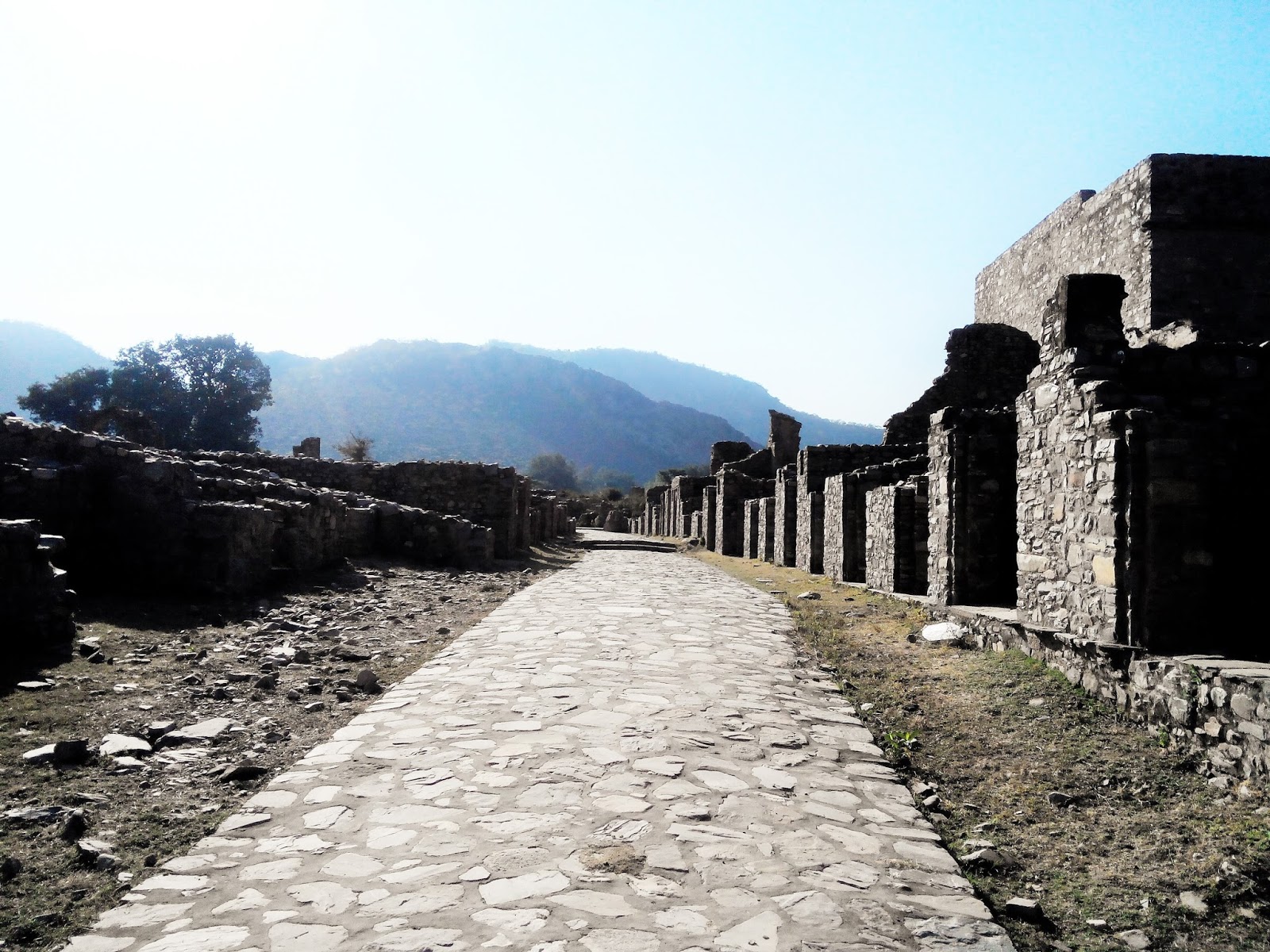
The Bhangarh Fort


The allure of Bhangarh is undeniable. Once you get acquainted with the name and google it, you will be greeted with titles such as ‘the most haunted place in India’ and ‘World’s only officially haunted place’. That, of course, is enough to catch everyone’s attention.


If offbeat is what you are looking for and you are anywhere near Delhi or Jaipur, Bhangarh is a highly recommended day trip. Take a private car and hit the road – it has more to offer than you would expect.


First on, Bhangarh is in the Alwar District of Rajasthan at a distance of less than 250 Kms from Delhi (and about 80 Kms from Jaipur). The road trip is a breeze in itself on the extremely well maintained highways of Rajasthan (except a painful stretch of around 10 Kms in between). For me, these roads hold a separate charm and are partially the reason why I keep finding a reason to go back to Rajasthan.


On the way from Delhi to Bhangarh, a few hardly known Garhs like Ratangarh and Pratapgarh can be seen from a distance, strewn over elevated pieces of land. You will have to drive through the gates of the sprawling outer wall of Ajabgarh that still stands on the road. Ruins on both side of the road, the Garh itself standing tall and an ancient temple (still accessible if you enthusiastic enough to climb over some rubble and follow a disappearing path) builds up your expectation for the ruins of Bhangarh, lying ahead.
Temple at Ajabgarh

Once you reach the Bhangarh Complex, it is not hard to imagine why it is rumoured to be haunted. Rows and rows of ruins of stone walls on each side of the path lead you to the main complex of the Bhangarh fort – these used to be the shops along the main road. Explore these outer ruins and you will come across the ruins of a few havelis on the fringes as well.


Dodge the menace of the monkeys to venture ahead and you will be greeted with a huge iron gate. Beyond this, awaits the dominating structures of the Bhangarh Fort, Gopinath Temple, Someshwar Temple and ruins of a mosque. The two temples are the only two structures which are not in ruins and still stand grand. The carvings on the walls of these temples, especially the Gopinath Temple, rival those of any of the better known temples in Rajasthan.


The fort, in all its ruined glory, gives off an eerie feeling. Walk in and explore the ruins – venture to all the levels of the fort. Some unwarranted sound from some corner of this fort will assuredly make give you goosebumps.


Gopinath Temple at Bhangarh

This is a place that you need to explore on your own and experience the uncertainty every nook and cranny seems to offer rather than read beforehand and prepare yourself about.


Go there. Explore the ruins. Expect the unexpected. Sit on the sprawling lawns and soak in the ambience. Walk over the ruined outer wall from the Lahori gate to the Ajmeri Gate. Spend an entire day, just away from the cities, lost in the possibilities of a city cursed long ago.


Tuesday, March 4, 2014

Varanasi… The city of ghats


About: Being one of the oldest cities of the world, and the cultural capital of India, the holy city of ‘Varanasi’ (also known as ‘Kashi’ and ‘Banaras’) is located on left bank of the Ganges at the confluence of two rivers: river Varuna (a minor tributary of the Ganges) and river Assi (a rivulet that borders the city of Varanasi at the south). It is one of the most revered pilgrimage destinations of the Hindus, the reason why they label their visit as Kashi/ Vishwanath darshan. The word ‘Kashi’ is derived from the word ‘Kas’ which means to shine. Varanasi is famous for the ghats along the banks of river Ganga. Pilgrims throng these Ghats to take a holy dip and rid themselves of sins. Every ghat has a specific use depending on the rituals performed. While the famous Dashashwamedh ghat and Dr.Rajendra Prasad ghat are well known for their spectacular Aarti’s, performed every dawn and dusk, there are ghats like Harishchandra and Manikarnika ghats which serve as Varanasi’r main crematorium by the river side. The latter burning ghat is named after Ravan’s chitah which is believed to burn forever and surprisingly this burning ghat works n burns twenty-four hours a day all round the year irrespective of the weather n season.


The Ghats : The best way to have a wider view of all the ghats along the stretch of about 7 km on the river bank is to take a boat ride available from the Harishchandra ghat. You can have a glimpse of all the ghats, nearing 64 in count, each of them is identified with a particular activity amongst all- some are exclusively for holy bath purposes, some are for bathing the buffaloes n cows, some for dhobi’s and a few are burning ghats. The boat ride in the evening is one of the main attractions of the visitors out there. With the ebb your boat comes to a hault in the dusk near the Dashawhamedh ghat where the well choreographed Ganga aarti is conducted for paying tribute to Ganga Maiyya. In the evening after Ganga Aarti, thousands of lighted earthen lamps are found floating in the waters of the holy Ganges and the floating lamps give a divine look to the river at nightfall. Simultaneously on the adjacent, the northern extension of the Dashawhamedh ghat called Rajendra Prasad ghat, another aarti is conducted which is less popular due to the presence of sadhus’ n certain unscrupulous men in the dirty steps in the evening. The Tulsi ghat, Assi ghat, Manmandir ghat, Munshi ghat, Meer ghat, Prayag ghat, Scindhia ghat, Kedar ghat, Ahilya ghat among others are among the less relevant ones.
 The Kashi Vishwanath darshan is the main motive of the visit of the pilgrims n tourists to Varanasi. In order to reach the temple , one has to traverse at least 1km on road by walking through the alleys, narrow enough to make you walk back if a king sized ox comes on your way!! There are several gates through which one can enter into the temple premises. For the reader’s reference, I would suggest to keep your slippers, coins, wallet, mobile phones, cameras etc. in the lockers available on rent in the sweet n puja thali shops. We prefer Jaipur Murti Bhandar located just opposite to Gate no.4 for entering into the temple premises. They provide the necessary assistance for the darshan.


Where to stay: In Varanasi you get to choose from innumerable number of hotels that has cropped up like wild mushrooms. One has to choose from mainly two categories of hotels: one- which are located on the ghats of Varanasi like Alka( on Meer ghat), Palace on Steps (on Assi ghat) etc. which will make you walk through the famous banarasi gallis’ with frequent interventions of the famous cows n oxen on your way paved with bricks and solidified dung here and there. Two- those hotels which will provide services equivalent to a 3 star standard international hotel but are located at around 12-14 km off the centre at Gowdowlia like Radisson, Taj Gateway etc. near the cantonment. If you want to experience the local culture n food of Varanasi you should stay somewhere near Gowdowlia which is a chowk like place, a junction up to which cars, cycle rickshaws are allowed and beyond which one n all have to walk if they want to visit the temple of Vishwanath or any of the ghats. In that case Hotel Atithi Satkaar can be a good option for it’s centrally located with all the standard luxury amenities. Apart from these you always have the option of low budget hotels which tend to be old houses converted into hotels which don’t offer a clean n tidy washroom.

What food good does the city offer: The busiest and the most popular market place is the Gowdowlia chowk which has the best of the eateries located on its way. Frankly speaking, in Varanasi you won’t get authentic Chinese or Indian non-veg dishes, so it’s better to go for veg dishes over there during your visit for a couple of days. If you’re a diehard non-veggie, go to Mc.D which has recently opened its outlet along with certain other non-veg resto’s in the shopping arcades nearby. Most of the days, we took our brunch n supper at the Keshari Restaurant on the main road from Gowdowlia, approaching towards ghats. They offer all veg. north-Indian and south Indian dishes, quite delicious in taste to satisfy the taste buds of strict non-veggies like me. All the derived milk products over there are absolutely pure and yummilicious as long as your tummy can tolerate those unadulterated fats n proteins. You must taste the thick creamy lassi topped with malai/kheer after a tiring walk on the alleys of Varanasi, or you can try out the famous Banarasi Thandai available in the lassi shops centered round Gowdowlia. Besides these, one can taste a variety of other flavored lassies like gulabi lassi, lemon lassi, kesar thandai, badam lassi amongst others.
In the evening, after a refreshing boat ride with empty stomach, one can taste the variety of chaats available with the fast food outlets accompanied by a keshar kulfi or a thandai. We had these in Keshari’s chat outlet which offered hygienic food in a clean ambience. In the rabri shops, you will find many people drinking hot milk in earthen glasses topped with kheer or rabri. I was in love with the plain curd that you get in those shops.

Places to visit: Ramnagarh Fort,Sarnath, Chunar Fort, Vindhyachal on Day 1 and Banaras Hindu University and Allahabad on Day 2. Visiting Allahabad is a must to watch the migrating Siberian birds fly by you on the Sangam in Allahabad during end November and December. You get to buy snackies on boat to feed those beautiful birds flying by your boat on the river in large numbers. The Allahabad Fort on the Sangam, Allahabad University, High Court and Anand Bhavan are the must see places in the city. Young buds, who are not so religious or running short of time might avoid Vindhyachal trip as it has a long journey associated on uneven roads with no interesting view except the Goddess darshan.

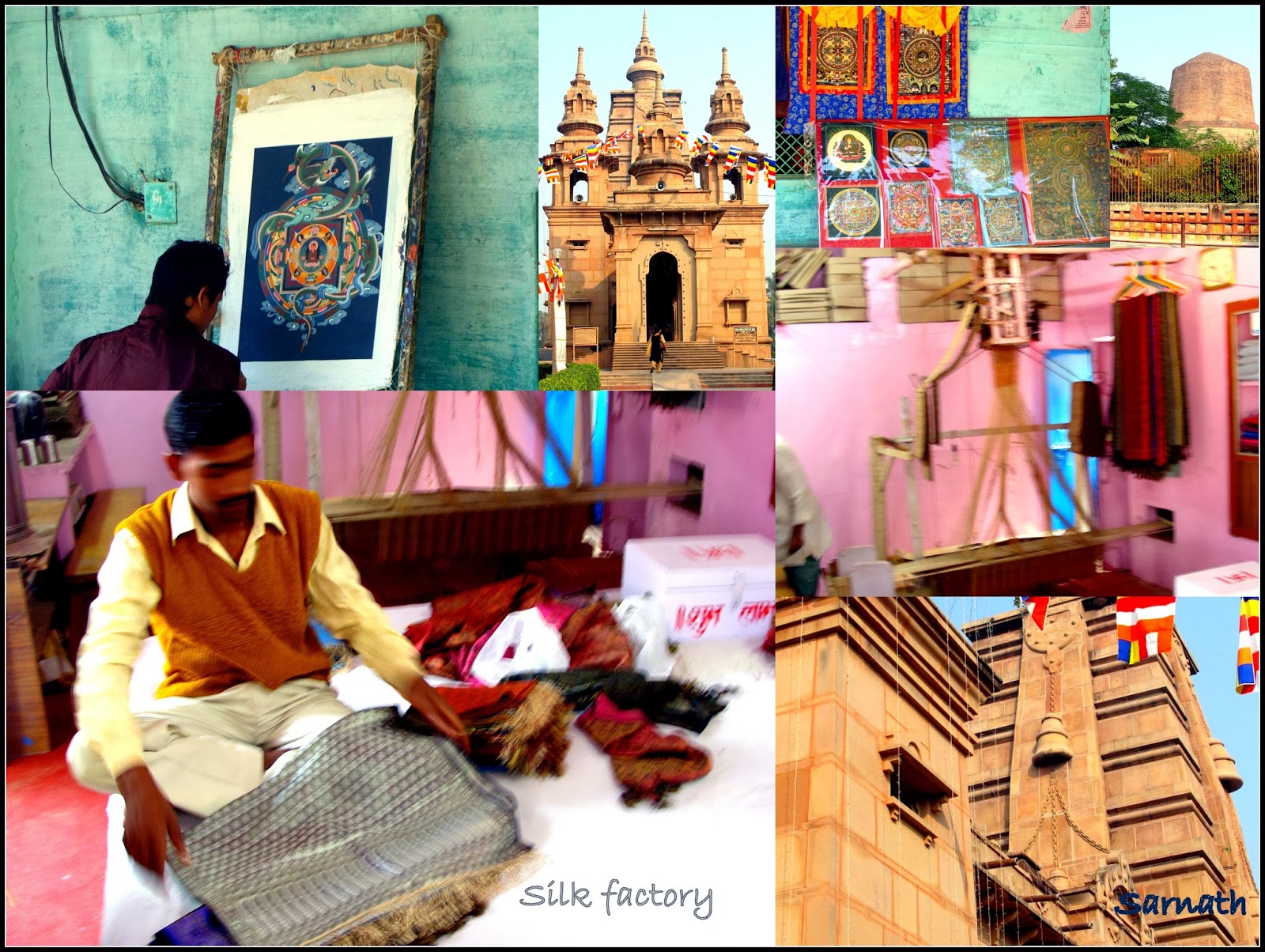
Sarnath: After the Buddha attained enlightenment in Bodh Gaya he came to Sarnath. In the Deer Park, he delivered his first sermon, or in religious language, set in motion the wheel of Law (maha- Dharmachakra Pravartan). On the day before his death Buddha included Sarnath along with Lumbini, Bodh Gaya and Kushinagar as the four places he thought to be sacred to his followers. The Emperor Ashoka, who spread the Buddha’s message of love and compassion throughout his vast empire, visited Sarnath around 234 BC, and erected a stupa here. Several Buddhist structures were raised at Sarnath between the 3rd century BC and the 11th century AD, and today it presents the most expansive ruins amongst places on the Buddhist trace. In Sarnath, one may visit the Banarasi silk factories which offer a variety of their handmade sarees, dress materials and handicrafts with exclusive designs.
Among the forts, I found the Chunar fort to be more thrilling and adventurous. The Fort is situated on the bank of the river and has several slits through which the warriors use to keep a check on the foreign enemies and intruders. The area is very famous for its clay and sandstone which gives home to ceramic artisans in the locality. The Chunar fort is situated 40 km from Varanasi. Situated in the Vindhya Range, Chunar Fort, overlooking the Ganges, has had a succession of owners representing most of India's rulers over the last 500 years. Sher Shah took it from Humayun in 1540, Akbar recaptured it for the Mughals in 1575 and in the 18th century it passed to the nawabs of Awadh. They were shortly followed by the British, whose gravestones here make interesting reading. Chunar sandstone has been used for centuries, in most famous Ashokan pillars and is still quarried, leaving the surrounding hills looking ravaged in places.


Conveyance for Local sight-seeing: The best option is to rent a car from Varanasi which costs around 3500 for a day. For Day 2(Allahabad), besides a rented car, one can avail train or frequently available public buses (ticket costs around 50 INR) if they don’t intend to return back to Varanasi. If you take public bus to Allahabad, you can rent a horse-cart or an auto rickshaw for taking the tourists round the city.
Shopping: You get accompanied by ladies n you don’t stop for shopping! Can’t happen ever!! The famous Vishwanath galli has numerous shops which sell the famous Banarasi sarees, silk, shawls and in every 10 ft you cover, you will find the famous Banarasi churis. The most surprising fact here is that every shop has some exquisite stock of bangles which attract the crowd. You will find many people doing their wedding shopping from here itself! In every 50 ft. you will see the pan and zarda shops selling famous indigenous Banarasi pans and masalas.
The city, although a spot of hindu pilgrimage gives an exemplary instance of coexistence of both hindu and muslim cultures in the same place which never comes into confrontation. While on our way through the narrow gallis of Bangali tola, we found so many muslim tailors n embroiders doing the zari work and making the lehengas n sarees. Besides this, as the name suggests, there are several Bengali families settled here who are either grocers or pan sellers or are sweet-makers. When you visit the city, you will find more than 50 per cent bongs around and some 30 per cent south Indians among the entire tourist population. Aged citizens tend to attain salvation on their visit to the holy shrine and youngsters and international tourists get to see the diverse cultures, beliefs, practices of Hinduism all poured together into the pot of prayers which they offer to Lord Vishwanath.


Tips: Buying exclusive sarees n silk? Visit Mohan’s silk store on the entrance to Vishwanath galli from the ghat’s end. They have an exclusive collection of sarees.
Staying by the river? We stayed at Palace on Steps on the Assi ghat- you have to walk about 1.5 km through bangali tola’s narrow lanes intercepted by bulls and cows but if you really wanna have the banarasi feel, you can opt for it. An added advantage is their rooftop restaurant which offers a variety of standard dishes available at a restaurant and of course serves non-veg!! The riverside view is simply awesome and you would love to spend hours on the breezy balcony by the riverside or on the terrace with your cup of coffee with the river flowing by.
P.S : Special Thanks to our guest editor Dyuti Sinha for this beautiful article and few breathtaking snaps. :)

Tagged: #Varanasi #Benaras #UttarPradesh #Ghats #Kashi #Gangas #Sarnarth #Ramnagarfort

Monday, January 20, 2014

Weekend respite – LANSDOWNE (from Delhi)


Sunrise from our hotel in Lansdowne
How to reach:  By road you can cover the 256 km distance between Delhi and Lansdowne in about 4-6 hours.
Where: Situated at 1700 mts above the sea level Lansdowne is the regimental Office of the formidable Garhwal Rifles of the Indian Army, located in the Pauri Garhwal district of Uttarakhand.
This cantonment town has a timeless charm with its pine trees and mossy surfaces. Little bungalows belonging mostly to army officials dot the slope at intervals. A walk through the slopes or drive on the well maintained meandering roads will surely grant anyone the elusive peace of mind. In the middle of the town stands the market place with a grand little white-washed post-office of British architecture and an old time stand-alone movie theater staying in sync with the nostalgic charm of the town. Though the ambience of this place in itself merits being a good enough travel destination there are a few must-visit tourist spots:
Bhulla Tal
  • The Tip and Top viewing point affords a breath-taking view of the snow-covered Garhwal Himalayas. Spend some magical moments lost in the majesty of the range during sunrise/sunset. You can make a quick trip to the Santashi Maa temple which is a bit beyond the viewing point. 
  • The Garhwal Rifles regimental Darwan Singh museum and their parade ground radiate the hard-earned glory of this famous regiment. The history of the illustrious regiment, the never ending honour-rolls and medals earned by the soldiers and their valiant stories are all very over-whelming. 
  • Situated amidst the thick oaks and pine trees are the St John and St Mary churches where you are transported to the British era with their serene and untouched beauty. Inside, the monochrome wedding pictures held in the church from that era gives you a certain hit of nostalgia. 
  • The artificial dam erected by the Army to create the Bhulla Tal is a perfect spot to sit and soak in the sun and the simple charm of this town with ducks, birds and rabbits vying for your attention. It is the perfect spot to spend some time with a book or your loved ones.

Tarkeshwar Mahadev Temple


But religious or not, it is highly recommended to take a short excursion to the Tarkeshwar Mahadev Temple. The 40 km drive on the narrow bendy roads is a joy in itself. Once you reach the spot you have to walk through the pine forests for a good 10-15 mins to reach the temple. It will certainly take your breath away in every sense and awaken your spiritual side. In a clearing of the pine trees are the small temples dedicated to unique shiv-lingam. The last bit of path leading to the temple is lined with rows of temple of every size. You can ring them as you walk along and they reverberate through the solitude of the forest.  It does make you wonder that it is indeed a befitting place for the Almighty to reside. Pray and leave your burdens behind in this temple and the adjacent Gauri Kund. There is a small ashram adjacent to the temple compound for tourist to stay and meditate to get in touch with their inner-self. Admittedly, I have not been able to avail of these facilities but the was sorely tempted with the thought of changing my plans and stay blissfully lost to the outer world. It was indeed a place worthy of attempting to achieve nirvana.
If you want to escape from your everyday life and travel back in time for the weekend, Lansdowne is the perfect place – just laze around, soak up the ambience and feel invigorated to face your everyday challenges again.

[Heads-up: Tata Photon did not have any coverage there when I went. So your taking work along is probably not a good idea. Though Airtel had good coverage throughout, and the phone data connection was sufficient for the bare minimum].

Dam at Bijnor
On the way:
At Bijnor, on our way to Lansdowne, we drove over the massive dam on the River Ganga. We stopped here for half an hour for the expansive view and to go to the ghat and pay homage to Ganga.

Detours:
In our attempt to add some adventure to this leisurely trip we visited Karnamuni ka Ashram on our way to the Lansdowne and Hastinapur on our way back.

Kanwamuni ka Ashram (the temple barely visible)
Kanwamuni ka Ashram is where Shakuntala grew up and met King Dushwant. Her son, Bharat, from whom India inherits her name Bharat, was born here. Enough reason for about 20 Km detour from our chosen route to Lansdowne.  After an uneventful drive through the not too crowded locality where everyone can point you towards the Ashram, a turn in the road suddenly changed the scene. The greenery and the solitude remind you of the stories as this place to be where King Bharat played with lions as a kid while growing up. Malini River flows along the road and on the other side, perched on the hill is a temple dedicated to Kanwamuni. Houses and a foot bridge being constructed right where we stopped to reach the temple contrasted starkly with the surrounding. We crossed the icy cold river on foot to reach the temple, only to realise that the path to reach the temple was too overgrown with creepers to make an approach possible. We later learnt that the path is cleared at a certain time of the year (around March) when people come to pay pilgrimage to the temple. At other times it just remains isolated and unapproachable.


The wall at Hastinapur
Hastinapur is a fully developed town and have no hope of holding on to any grand illusion of it remotely resembling the seat of power of the Kouravas, around which the story of Mahabharata revolves. Gigantic innumberable Hindu and Jain temple complexes dominate this overcrowded town. We were short on time and only interested in finding out the remnants of the palace of the Kouravas, if any. Hence, we gave the temples a miss and our search led us to an extremely old and secluded temple at the edge of the town. From here, directed by the locals we reached a walled area within which we were told once stood the palace. It sure looked like some great structure stood there once upon a time, now disappeared beneath the soil, and overgrown trees. We proceeded on foot to the centre of this walled area to be rewarded with a very tiny portion of some extremely old wall  of some fort like structure still standing in the middle though am extremely doubtful if it has any relation to the actual palace. And to our bewilderment, there were families cooking and spending a leisurely outing on top of the only ruin that stands there. Absolute anti-climax. Basically, not worth the detour in my opinion but then the importance of Hastinapur in indisputable.

Twitter Delicious Facebook Digg Stumbleupon Favorites More